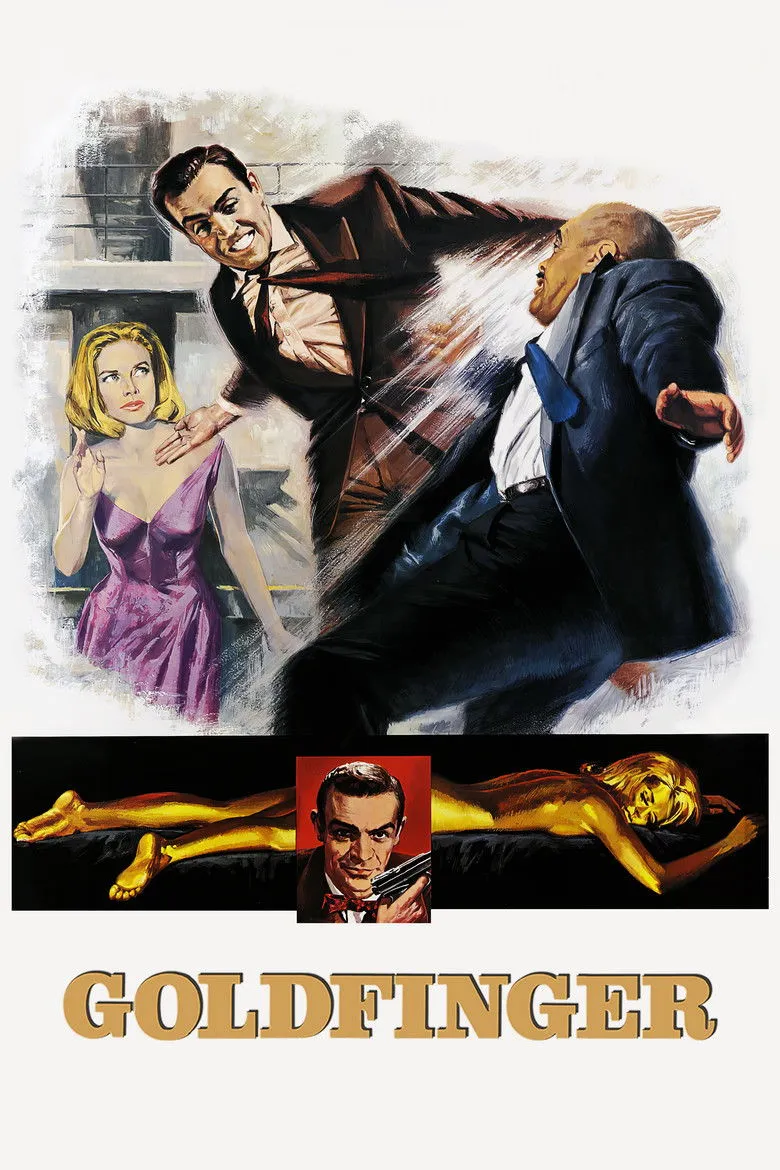
Film no. 3 · 1964 · Connery era
 Goldfinger
Gold, a laser and a silver Aston Martin – the film that set the Bond formula
TMDB rating: 7.4 / 10 · View on TMDB
Plot
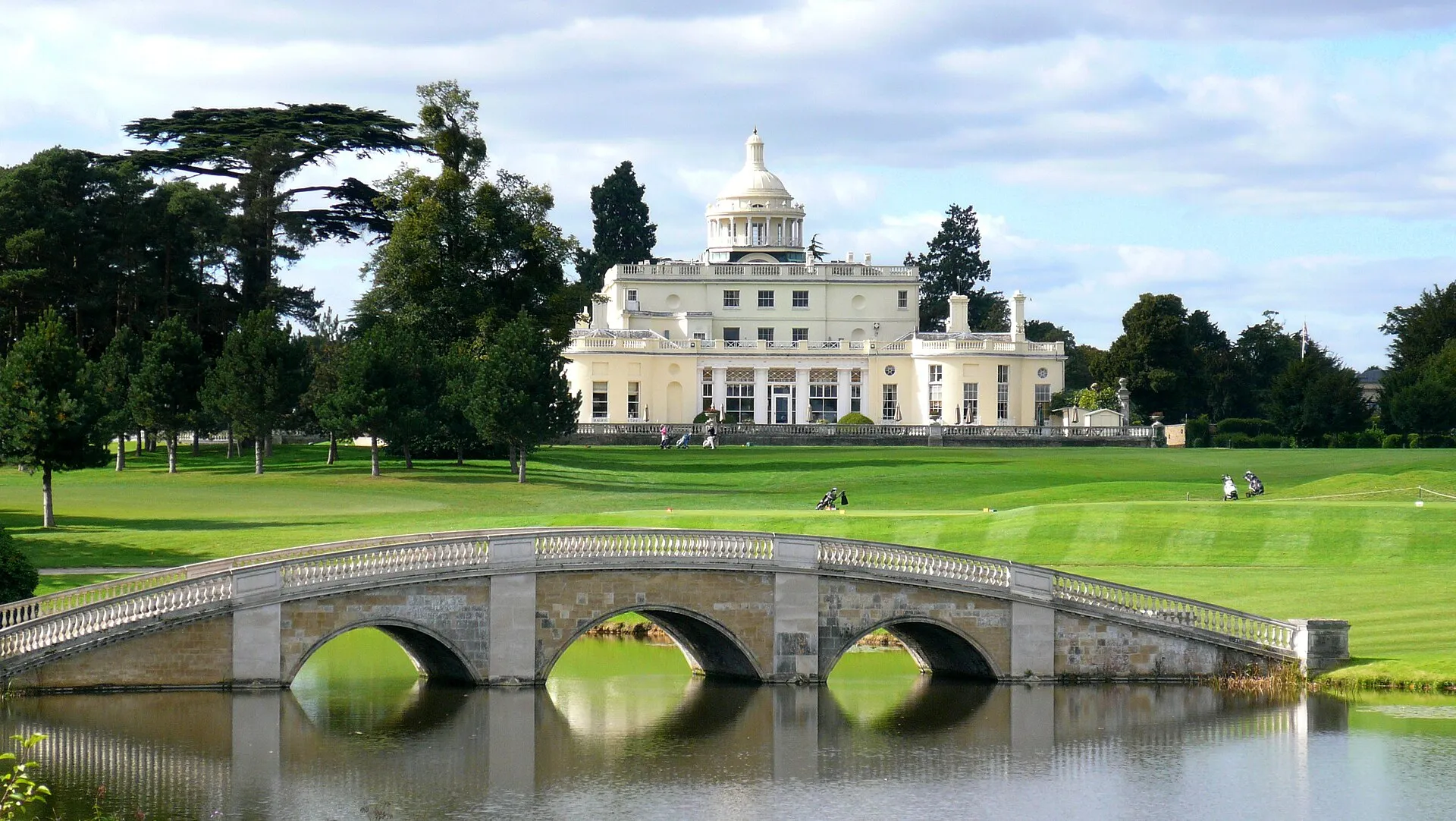
After a sabotage mission in Latin America, James Bond is supposed to be relaxing in Miami Beach. Instead Felix Leiter asks him to keep an eye on bullion dealer Auric Goldfinger. Bond discovers that Goldfinger cheats at cards with the help of his employee Jill Masterson and spends the night with her – the next morning she lies dead in his room, covered head to toe in gold paint. Back in London Bond learns that the Bank of England suspects Goldfinger of smuggling gold out of the country. During a round of golf in Kent he rattles the millionaire and plants a homing device on his Rolls-Royce.
In the Aston Martin DB5 Bond follows the signal into Switzerland. On an Alpine pass he gets caught in the crossfire when Jill's sister Tilly tries to shoot Goldfinger. At Goldfinger's plant he overhears talk of "Operation Grand Slam" but is discovered. Tilly is killed by Oddjob's bowler hat and Bond ends up strapped to a gold table beneath a laser beam. Fearing that Bond's superiors know more than he does, Goldfinger keeps him alive and flies him to the United States.
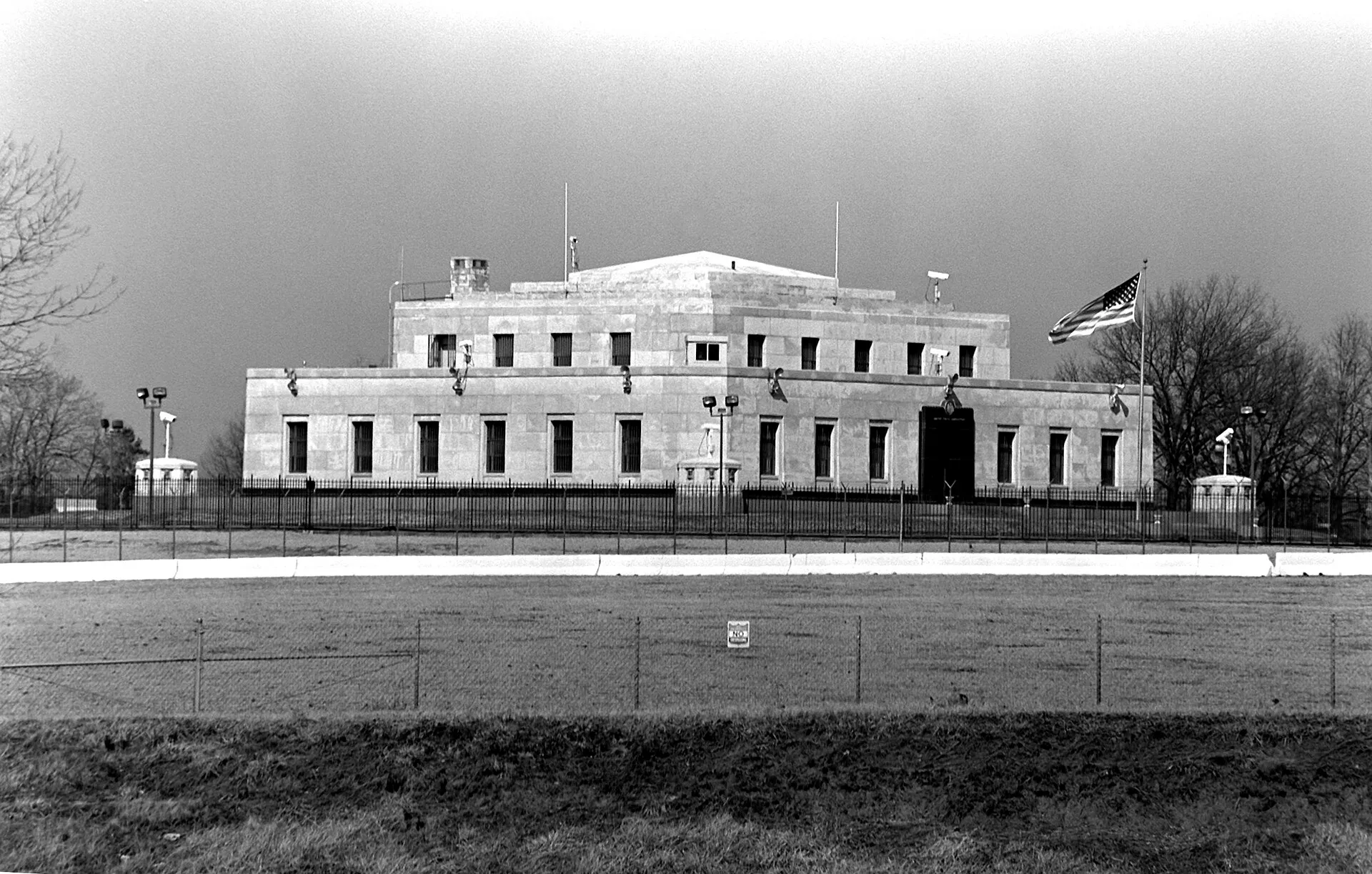
At Goldfinger's stud farm in Kentucky Bond learns the full plan: an atomic bomb is to irradiate the gold in Fort Knox and so multiply the value of Goldfinger's own holdings. Bond manages to win over pilot Pussy Galore. She swaps the nerve gas for a harmless substance, the army plays dead and strikes at the decisive moment. Inside the vault Bond defeats Oddjob and the bomb is defused with seven seconds to spare. On the flight to Washington Goldfinger turns up one last time – and is sucked out of the aircraft window during the struggle.
Facts
- James Bond
- Sean Connery
- Director
- Guy Hamilton
- Screenplay
- Richard Maibaum and Paul Dehn
- Producers
- Harry Saltzman and Albert R. Broccoli
- Music
- John Barry
- Title song
- „Goldfinger“Shirley Bassey
- Based on
- Ian Fleming: „Goldfinger“1959
- Running time
- 110 minutes
- Budget
- $3 million
- Box office
- $125 millionworldwide, including reissues (Wikipedia en); Box Office Mojo lists only $51.2 million, of which $51.1 million domestic
- Release
- UK: 17 September 1964US: 22 December 1964Germany: 14 January 1965
Travel route and filming locations
Gold numbers trace Bond's journey through the story, light markers show the real filming locations. Each layer can be hidden separately.
Bond's route · 10 stops
Pre-title sequence: Bond blows up a Mr Ramirez's drug lab and kills an attacker with an electric heater in the bathtub. The country is unnamed in the film, usually read as Mexico.
Mexico → Miami Beach, Fontainebleau Hotel · ≈ 2,074 km
Felix Leiter puts Bond onto Goldfinger; Bond exposes the card cheat with Jill Masterson, who is found dead and gilded the next morning.
Miami Beach, Fontainebleau Hotel → London · ≈ 7,118 km
M and Colonel Smithers of the Bank of England lay out the gold-smuggling suspicion; Q hands over the Aston Martin DB5.
London → Royal St. Marks golf club, Kent · ≈ 105 km
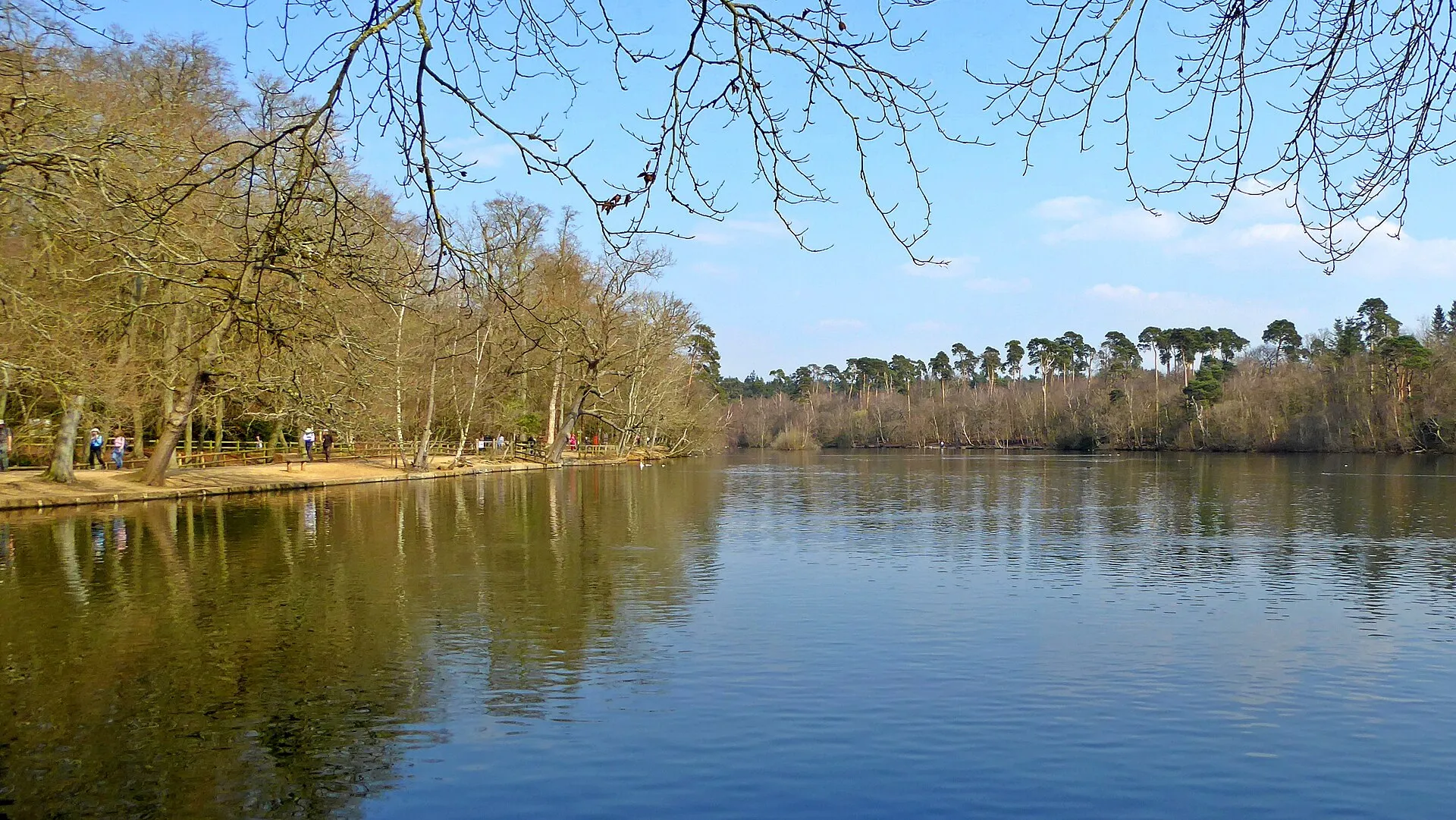
Fictional club near Sandwich; shot at Stoke Park. Bond beats Goldfinger at his own cheating game and plants the homing device on the Rolls-Royce.
Royal St. Marks golf club, Kent → Southend Airport · ≈ 56 km
Goldfinger's Rolls-Royce is loaded into a Carvair freighter bound for Geneva; Bond follows in the DB5.
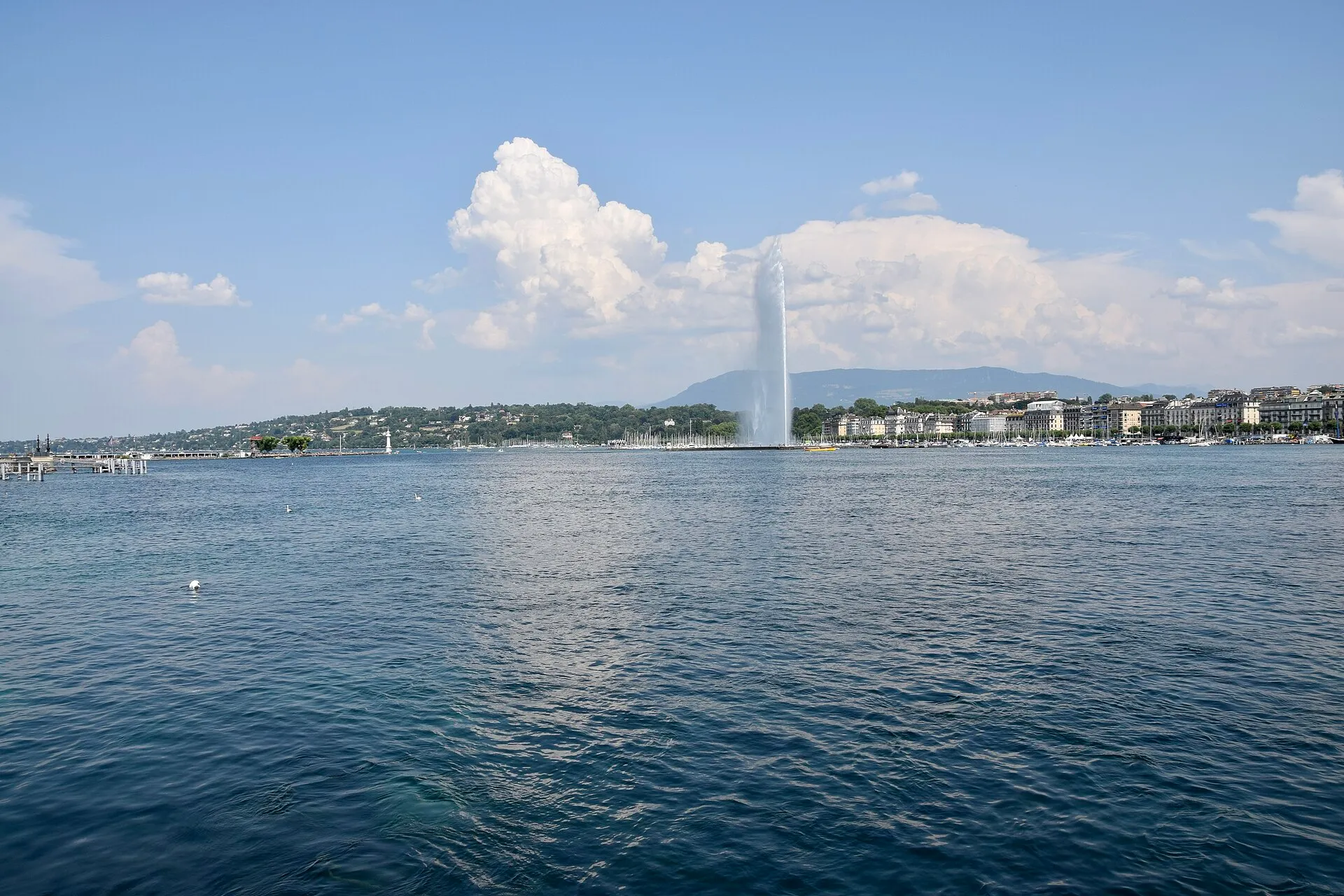
Southend Airport → Geneva · ≈ 717 km
Bond picks up the Rolls-Royce's trail again in Switzerland.
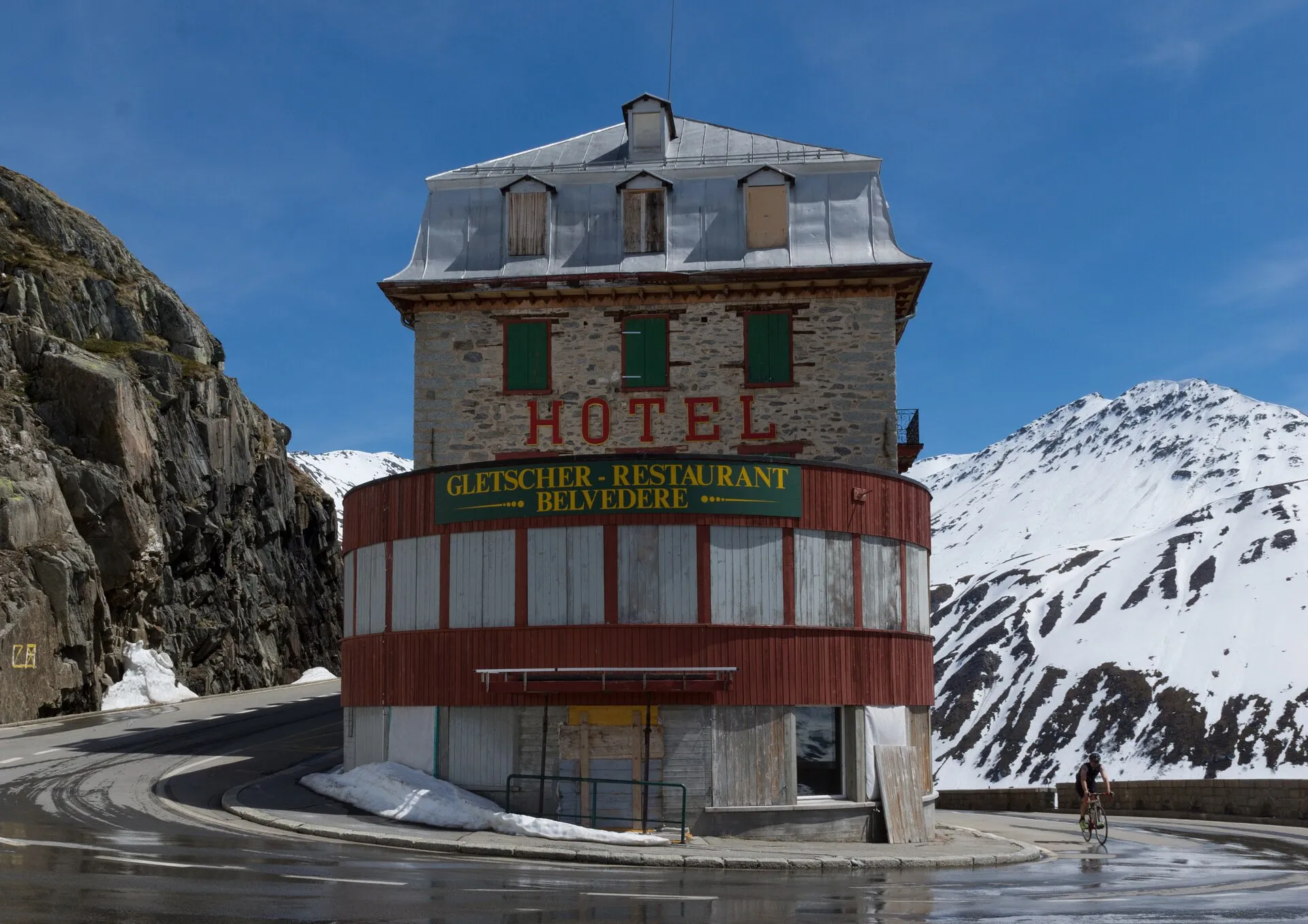
Geneva → Furka Pass · ≈ 179 km
During a stop at a fruit stand Tilly Masterson shoots at Goldfinger and narrowly misses Bond; he chases her Mustang and slashes its tyres.
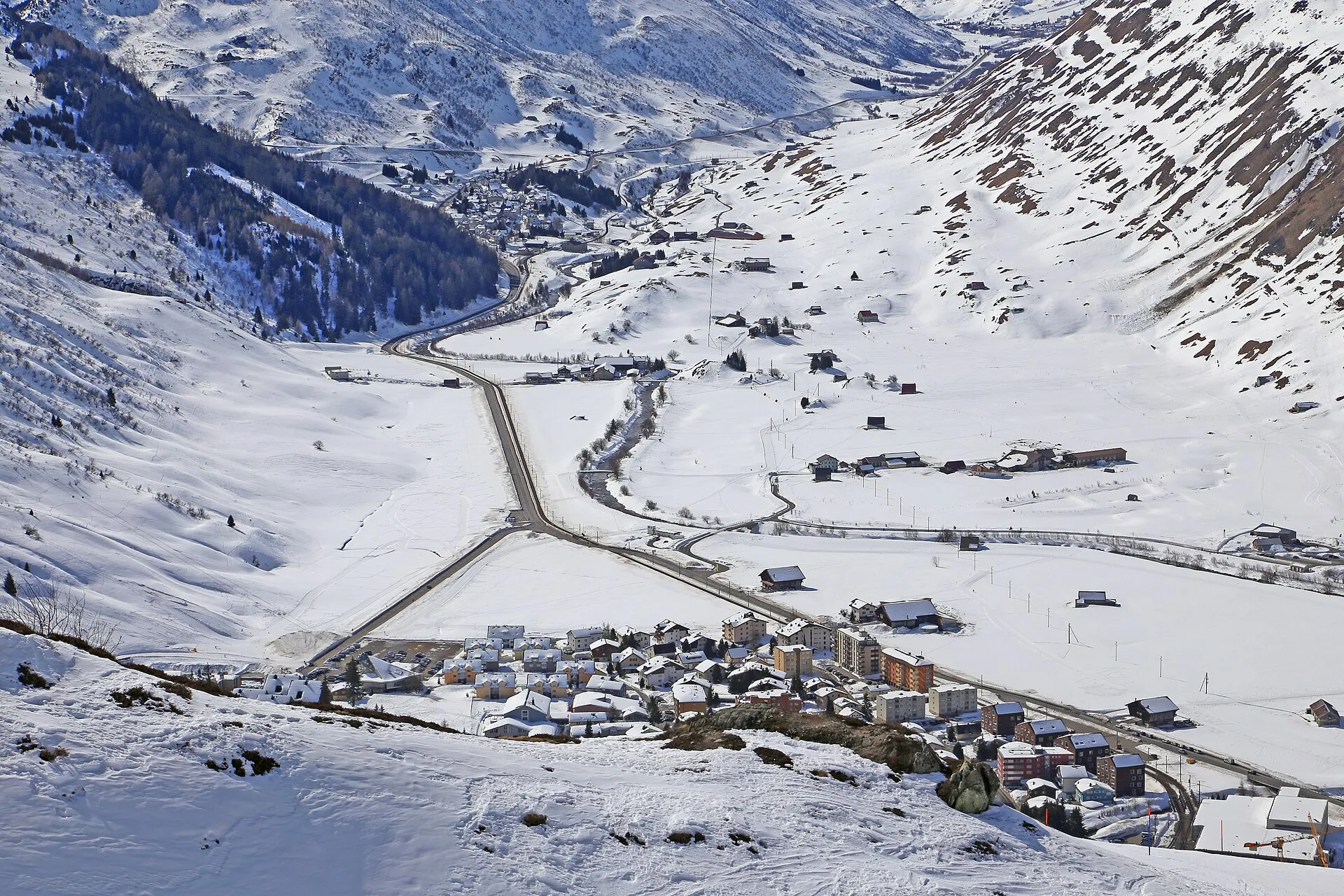
Furka Pass → Andermatt, Aurora filling station · ≈ 15 km
Bond refuels the Aston Martin and drops off Tilly, who claims to be on a skating trip.
Andermatt, Aurora filling station → Auric Enterprises A.G., Switzerland · ≈ 41 km
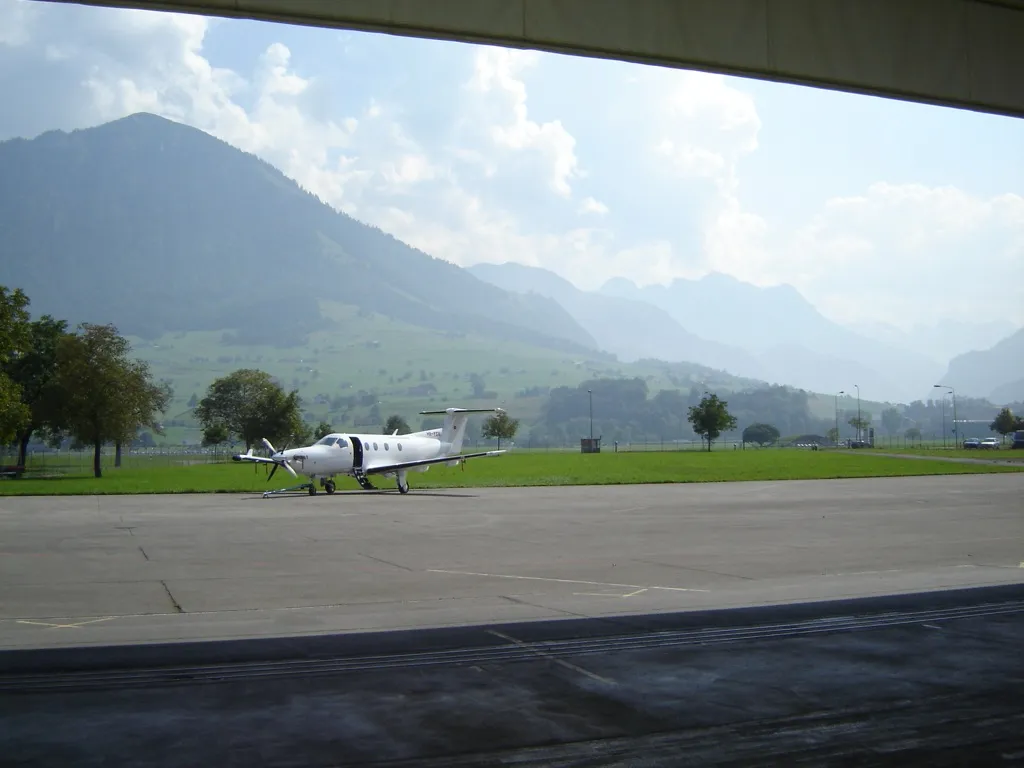
Fictional plant, shot at Pilatus in Stans. Bond eavesdrops on Goldfinger and Mr Ling, Tilly is killed by Oddjob's hat, and after a night chase Bond is captured and strapped to the laser table.
Auric Enterprises A.G., Switzerland → Blue Grass Field, Lexington, Kentucky · ≈ 7,229 km
Goldfinger's JetStar, flown by Pussy Galore, lands in Kentucky; Bond tries to slip a message to Felix Leiter but Oddjob intercepts it.
Blue Grass Field, Lexington, Kentucky → Goldfinger's Auric Stud farm, Kentucky · ≈ 104 km
Fictional stud farm near Louisville. Goldfinger presents "Operation Grand Slam" to the mob bosses and gasses them; Mr Solo ends up in the car crusher; Bond wins Pussy Galore over in the hay.
Goldfinger's Auric Stud farm, Kentucky → Fort Knox, Kentucky · ≈ 45 km
The Flying Circus gasses the garrison and Goldfinger's men blast open the bullion depository; inside the vault Bond defeats Oddjob and the bomb is stopped at 007 seconds.
Fort Knox, Kentucky → Godman Army Airfield, Fort Knox · ≈ 3 km
Bond is flown out to meet the President in Washington – but Goldfinger has replaced the crew.
Godman Army Airfield, Fort Knox → Over the Atlantic off the US East Coast · ≈ 922 km
During the fight in the JetStar a window shatters and Goldfinger is sucked out; Bond and Pussy Galore bail out by parachute. Position is a plausible assumption.
Filming locations · 14
doubles for Mexico (Mexico)
Pre-title sequence: the oil tanks and the drug lab Bond blows up
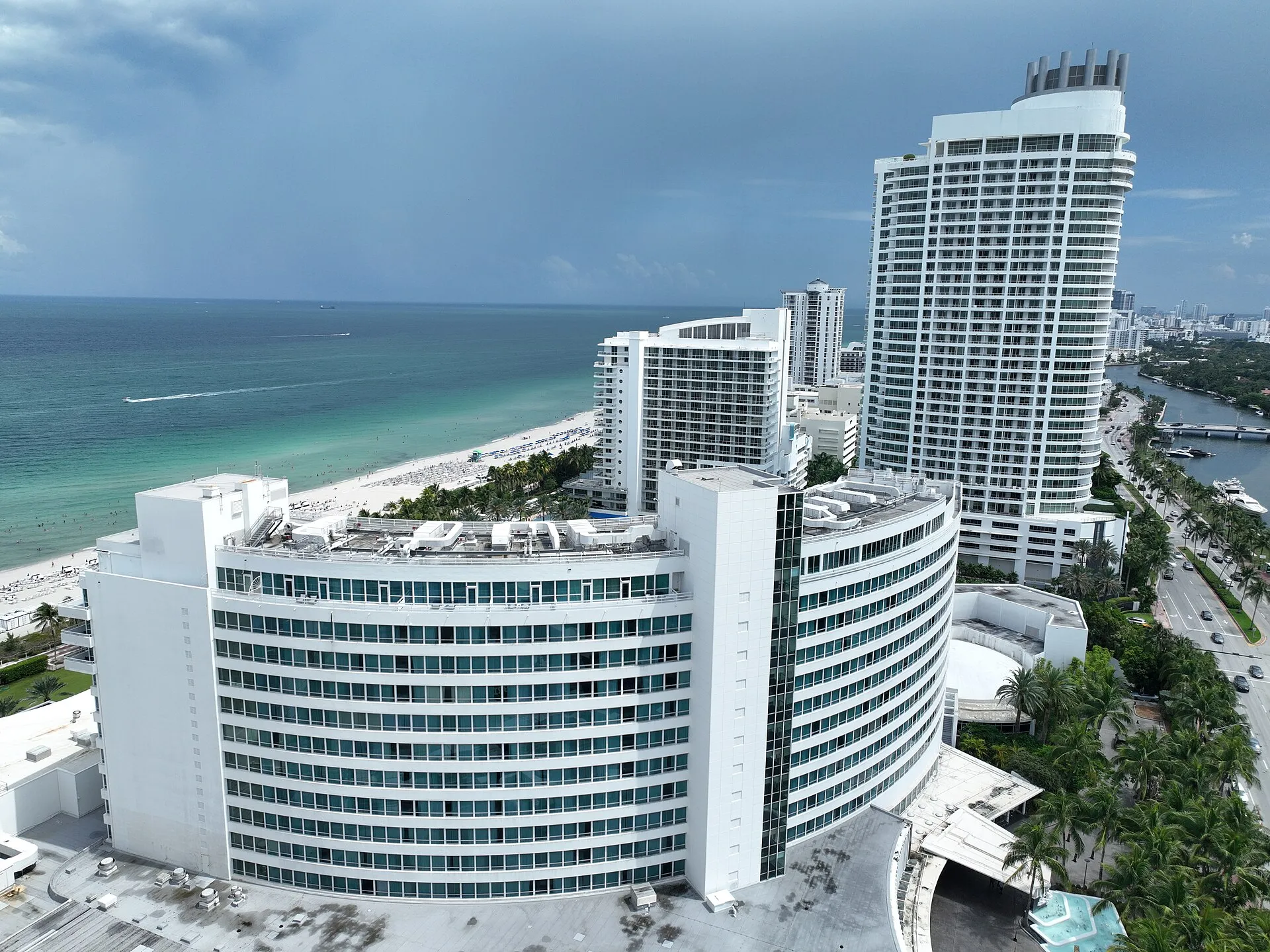
Aerial shot after the titles and hotel exteriors; the poolside scenes with the actors were shot at Pinewood
doubles for Scrap yard near Louisville, Kentucky (United States)
Scrap yard where Oddjob has the Lincoln Continental crushed with Mr Solo inside
doubles for Kentucky (United States)
The restaurant where Felix Leiter and his colleague follow Bond's homing signal
doubles for Royal St. Marks golf club, Kent (United Kingdom)
The entire golf match including the clubhouse and car park where Oddjob decapitates the statue
Loading of the Rolls-Royce into the Carvair; Bond sees Goldfinger off
Fruit stand, Tilly's shot and the DB5-versus-Mustang chase on the hairpins; one bend is now signposted "James Bond Strasse"
Further driving shots of the chase on the Furka road
Bond refuels the Aston Martin and drops Tilly off; the film's final location
doubles for Auric Enterprises A.G. (Switzerland)
Exteriors of Goldfinger's plant, the arrival of the Rolls-Royce, Bond's crash in the DB5 and his capture
doubles for Auric Enterprises grounds, Switzerland (Switzerland)
Night chase of the DB5 through the factory grounds with oil slick, smoke screen and ejector seat
doubles for Blue Grass Field and Godman Army Airfield, Kentucky (United States)
The JetStar's landing in Kentucky and Bond's departure for Washington
Second-unit aerial and exterior shots of the bullion depository and the post, combined with reconstructions at Pinewood
doubles for Fort Knox (United States)
Fort Knox vault, replica of the Fontainebleau pool, laser room, Goldfinger's rumpus room, Q Branch, JetStar cabin, Fort Knox perimeter on the backlot
Characters and cast
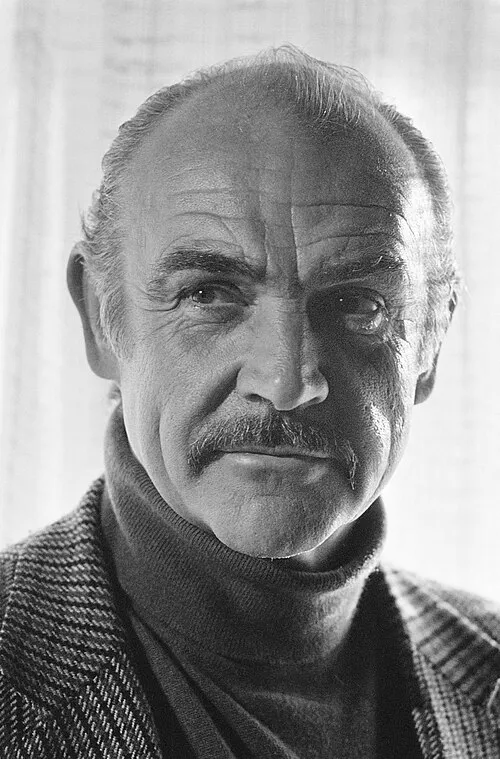
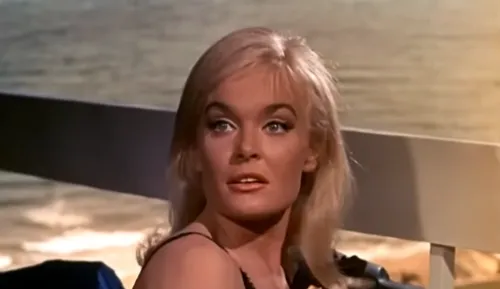
Bond girls
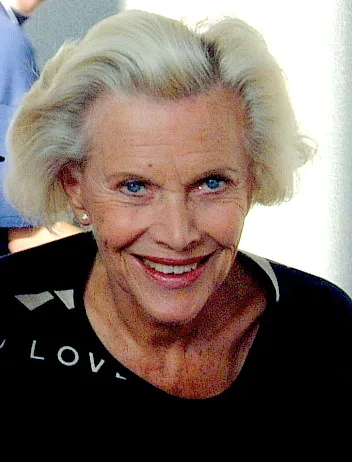
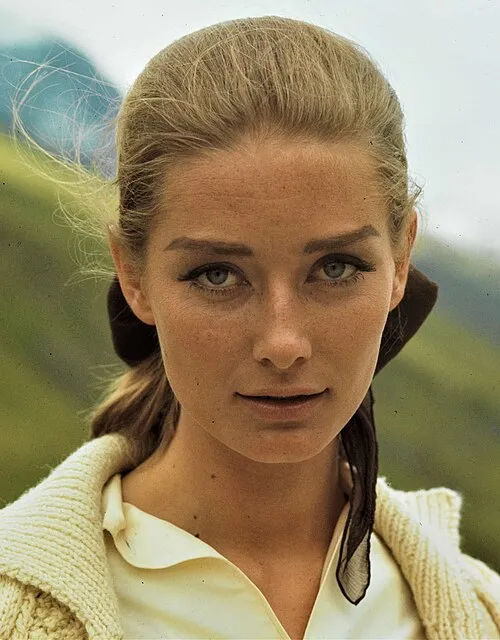
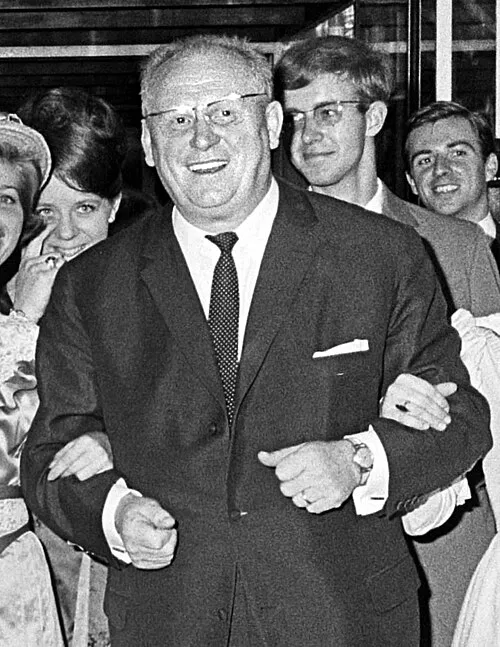
Henchmen
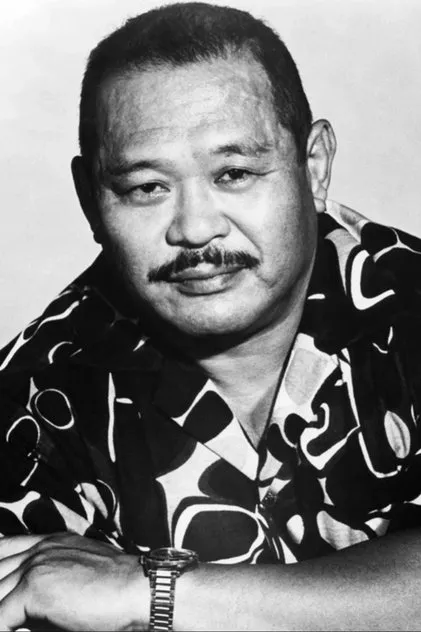
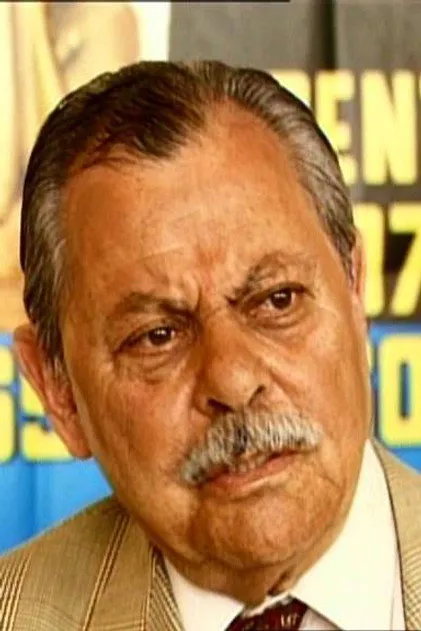
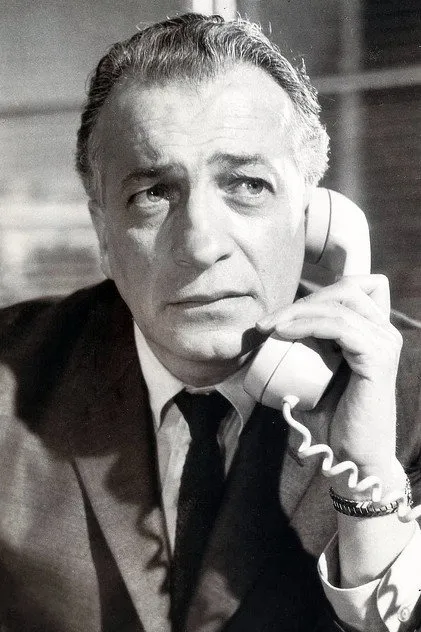
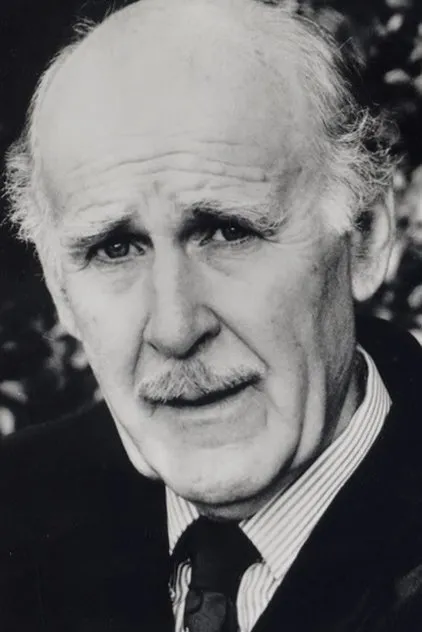
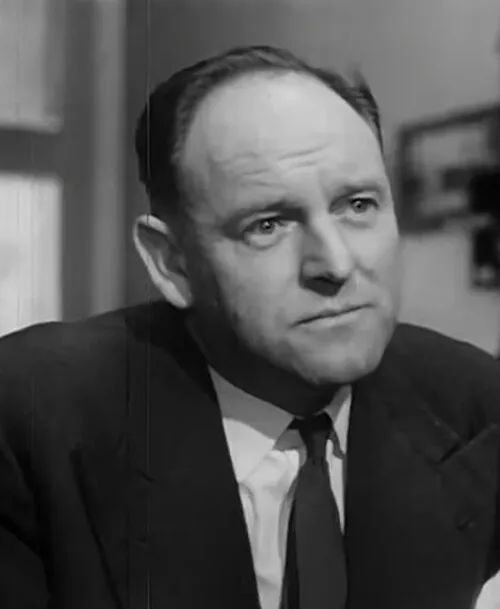
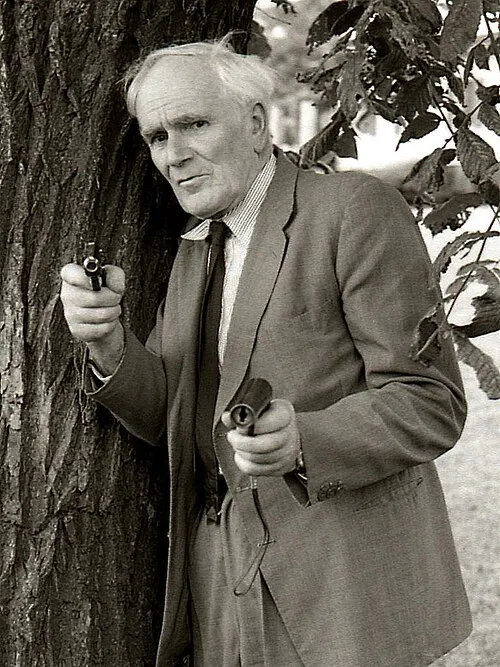
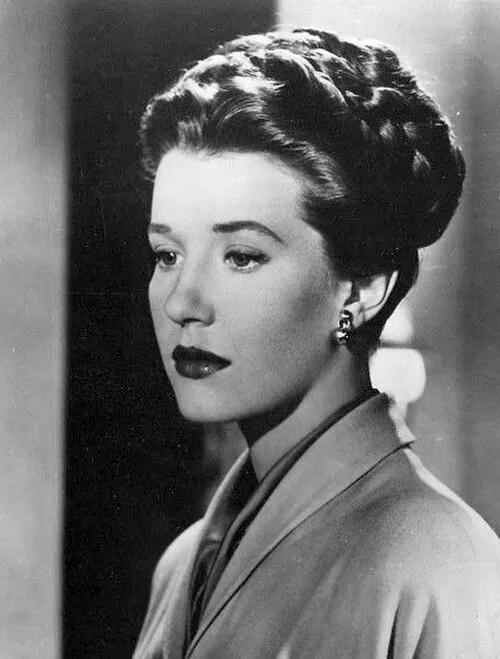
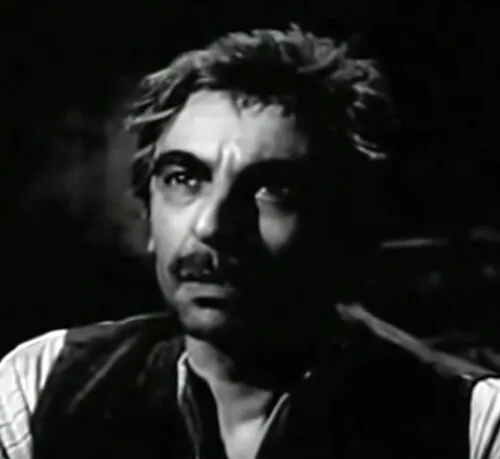
Vehicles & Gadgets
Vehicles
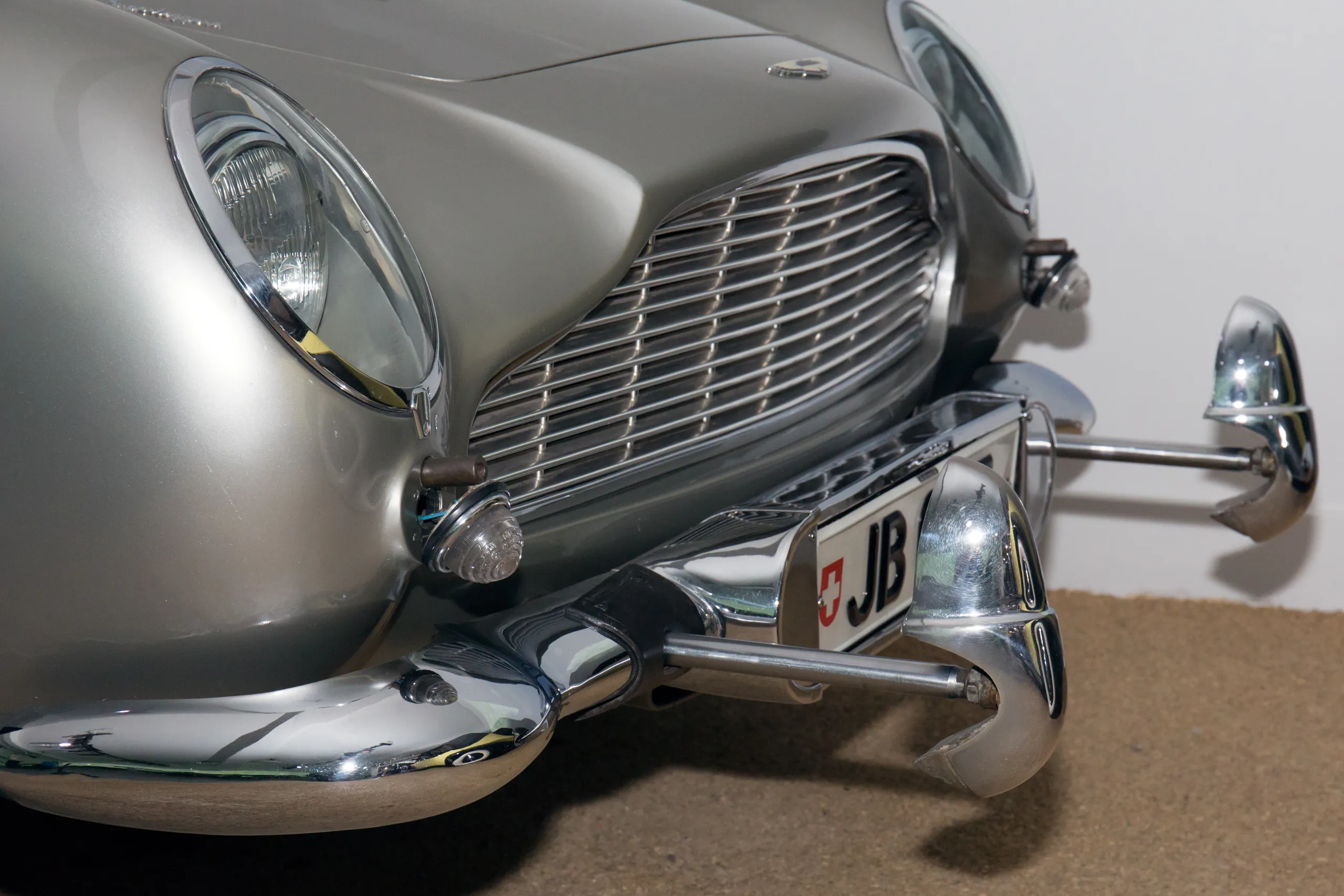
The Aston Martin DB5 with its gadgets at the National Motor Museum in BeaulieuPhoto: Morio · CC BY-SA 3.0 · Wikimedia Commons Aston Martin DB5
Car1963Silver birch, registration BMT 216A; the most famous Bond car and the model for 1964's best-selling toy (Corgi)
Production designer Ken Adam and effects man John Stears spent six weeks fitting the DB5 prototype DP/216/1 with an ejector seat, machine guns, oil slick, smoke screen, tyre slashers, a bulletproof rear shield and revolving number plates; Aston Martin had only reluctantly agreed to the product placement. A second, standard DB5 (DB5/1486/R) handled the driving scenes and only later received the same gadgets for promotional tours; two further publicity cars stood at the 1964 New York World's Fair. The effects car went back to the factory in 1968 and was sold as a standard car, was stolen from a hangar in Florida in 1997 and has been missing since; the road car fetched £2.6 million at RM in London in 2010, one of the publicity cars $6.4 million in 2019. The Corgi model of the car was the best-selling toy of 1964.
- Driven by
- James Bond
- Specs
- 4.0 L DOHC straight-six, 282 bhp, 145 mph
Sources: 007.com: Aston Martin DB5 · Wikipedia (en): Aston Martin DB5 · astonmartins.com: DB5 for 007 James Bond (Goldfinger/Thunderball) · IMCDb: 1963 Aston Martin DB5 Pre-production [DP216/1] in Goldfinger · Bond Lifestyle: Aston Martin DB5 · Wikipedia (en): Goldfinger (film)
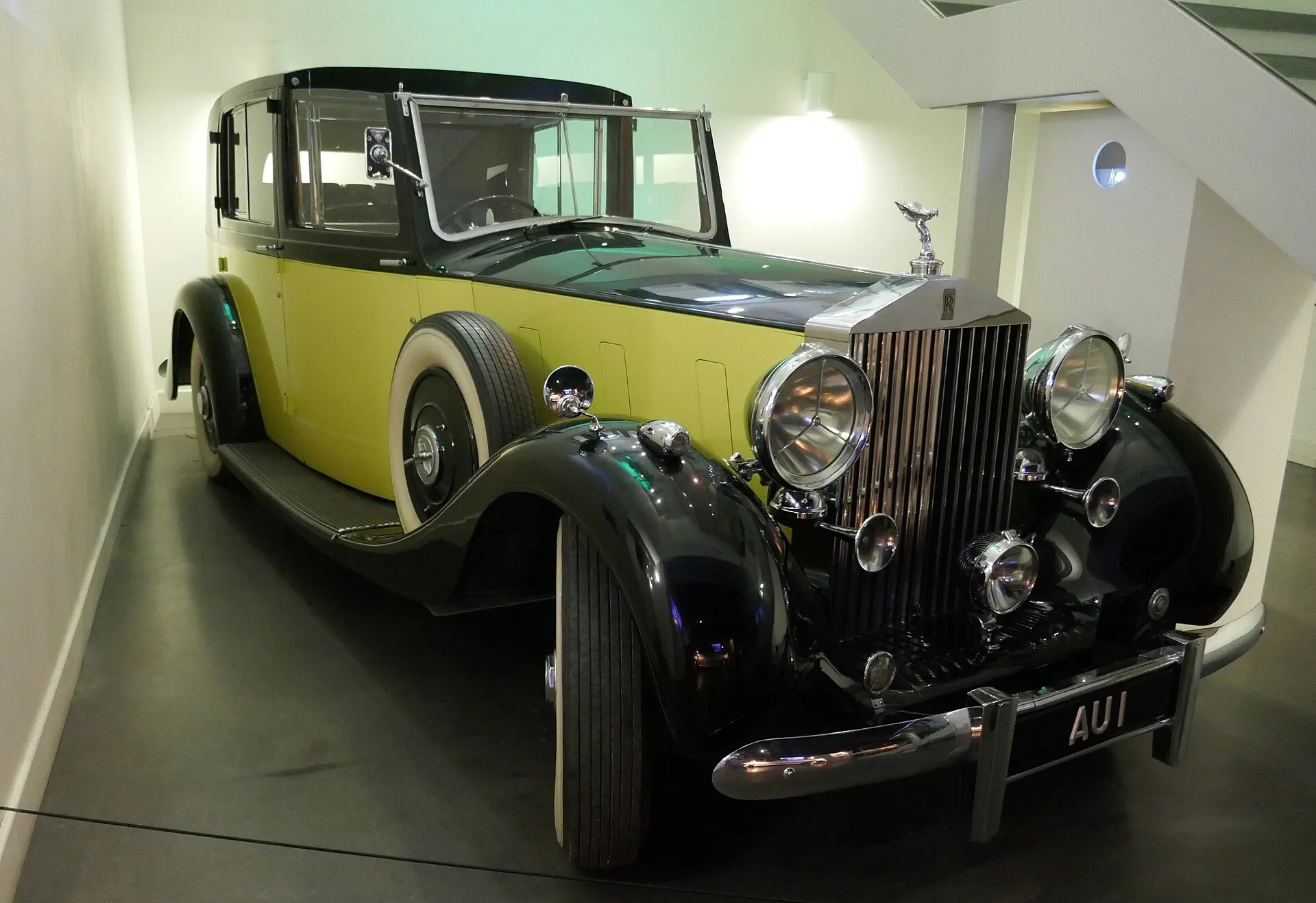
Goldfinger's Rolls-Royce Phantom III, registration AU 1 – the original car from the filmPhoto: FR · CC BY-SA 4.0 · Wikimedia Commons Rolls-Royce Phantom III (1937)
Car1937Goldfinger's car, registration AU 1, whose bodywork is smuggled gold
Goldfinger's black and yellow Phantom III with the registration AU 1 (Au as in aurum, gold) is chassis 3BU168, a Barker Sedanca de Ville built in 1937 for Lord Fairhaven of Anglesey Abbey. In the film Goldfinger has the bodywork remade in solid gold to smuggle the metal to Geneva on every trip; Bond attaches the homing device to the car and follows it across the Alps. The car survives, appeared at Stoke Park for the 50th Bond anniversary in 2012 and at the Skyfall premiere, and was shown in "Bond in Motion" at the London Film Museum and at the National Motor Museum in Beaulieu.
- Driven by
- Oddjob (as chauffeur)
- Specs
- 7.3 L V12, about 180 hp (134 kW), quoted top speed 100 mph
Sources: Bond Lifestyle: Rolls-Royce Phantom III · IMCDb: 1937 Rolls-Royce Phantom III Barker Sedanca de Ville [3BU168] in Goldfinger · Wikipedia (de): Rolls-Royce Phantom III · Wikipedia (en): Rolls-Royce Phantom III
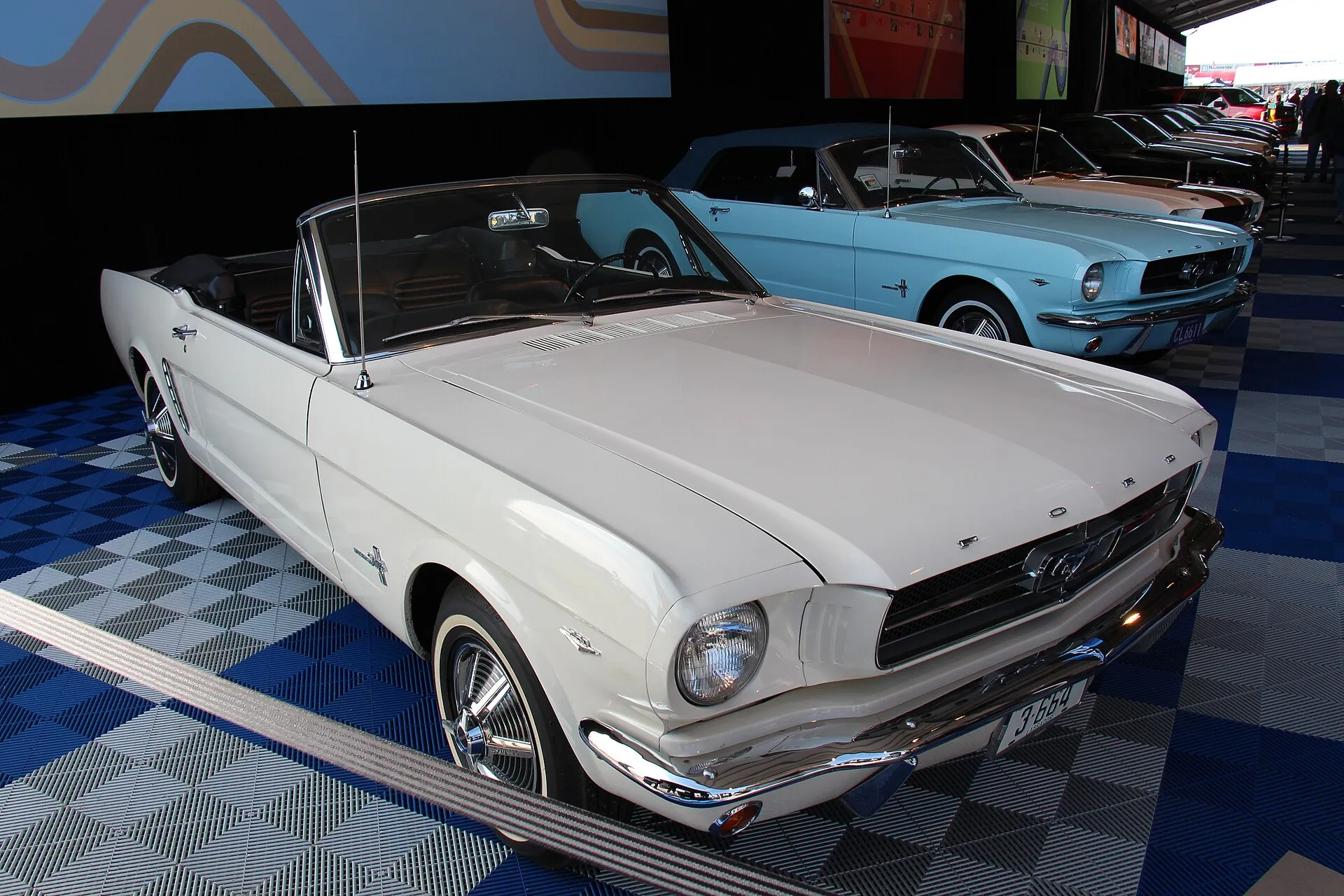
A production Mustang of the first model year, like the one Tilly Masterson races over the Furka PassPhoto: Sicnag · CC BY 2.0 · Wikimedia Commons Ford Mustang Convertible (1964½)
Car1964Tilly Masterson's car; the Mustang's first appearance in a feature film
Tilly Masterson chases Goldfinger's Rolls-Royce over the Furka Pass in the cream-white Mustang with red leather and a red top (registration MLO 973B) until Bond shreds her tyres with the DB5's hubcap blades. Ford supplied the car, launched only on 17 April 1964, as part of a product placement deal that also covered Leiter's Thunderbird, the Country Squire and Solo's Lincoln; it was prepared by Alan Mann Racing. IMCDb lists the car as a 1965 model-year pre-production example; the early Mustangs are usually called "1964½". The photo shows a production example.
- Driven by
- Tilly Masterson
- Specs
- Optional 2.8 L straight-six (105 hp), 4.3 L V8 (164 hp) or 4.7 L V8 (up to 271 hp)
Sources: Bond Lifestyle: Ford Mustang convertible · IMCDb: 1965 Ford Mustang Pre-production in Goldfinger · Wikipedia (en): Ford Mustang (first generation) · Wikipedia (en): Goldfinger (film)
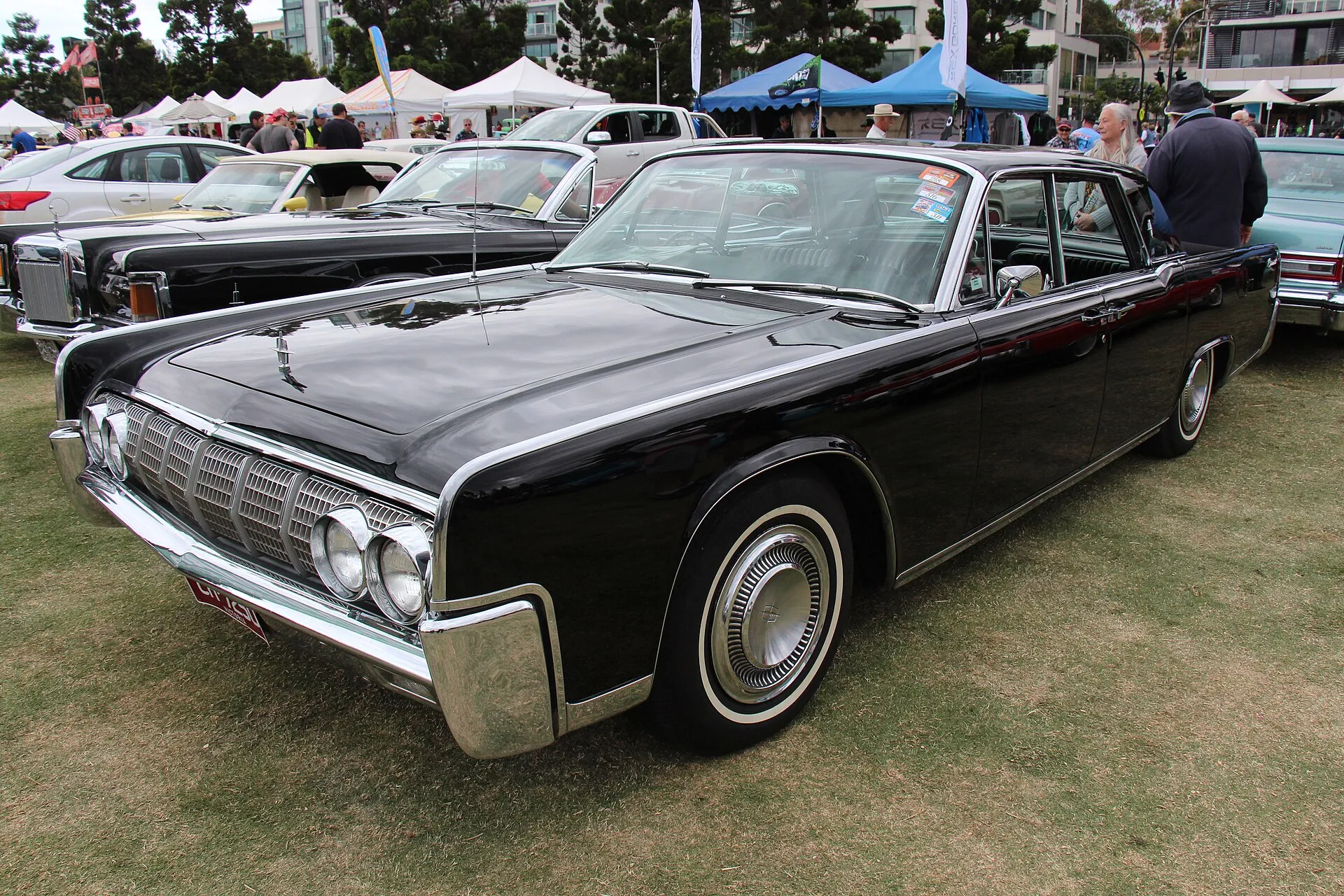
A production 1964 Continental – Goldfinger's car of this type ends up in the crusher with Mr. SoloPhoto: Sicnag · CC BY 2.0 · Wikimedia Commons Lincoln Continental (1964)
Car1964Mr. Solo's car, crushed with him inside
Goldfinger's dark blue Continental sedan with rear-hinged doors is supposed to take Mr. Solo and his share of the gold to the airport; instead Oddjob shoots him on a side road and has the car crushed into a cube at a scrapyard, body and gold included. The script called for a Cadillac; Ford's product placement turned it into a Lincoln. The engine was removed before crushing, and the cube had to be partly cut so that the bed of the Ford Ranchero could carry the weight. From 1964 the Continental had a 3-inch longer wheelbase and a squarer roofline. The photo shows a production example.
- Driven by
- Oddjob
- Specs
- 7.0 L V8 (430 cu in MEL), about 320 hp
Sources: IMCDb: 1964 Lincoln Continental Four Door Sedan [53A] in Goldfinger · Wikipedia (en): Goldfinger (film) · Wikipedia (en): Lincoln Continental · Wikipedia (en): Ford MEL engine
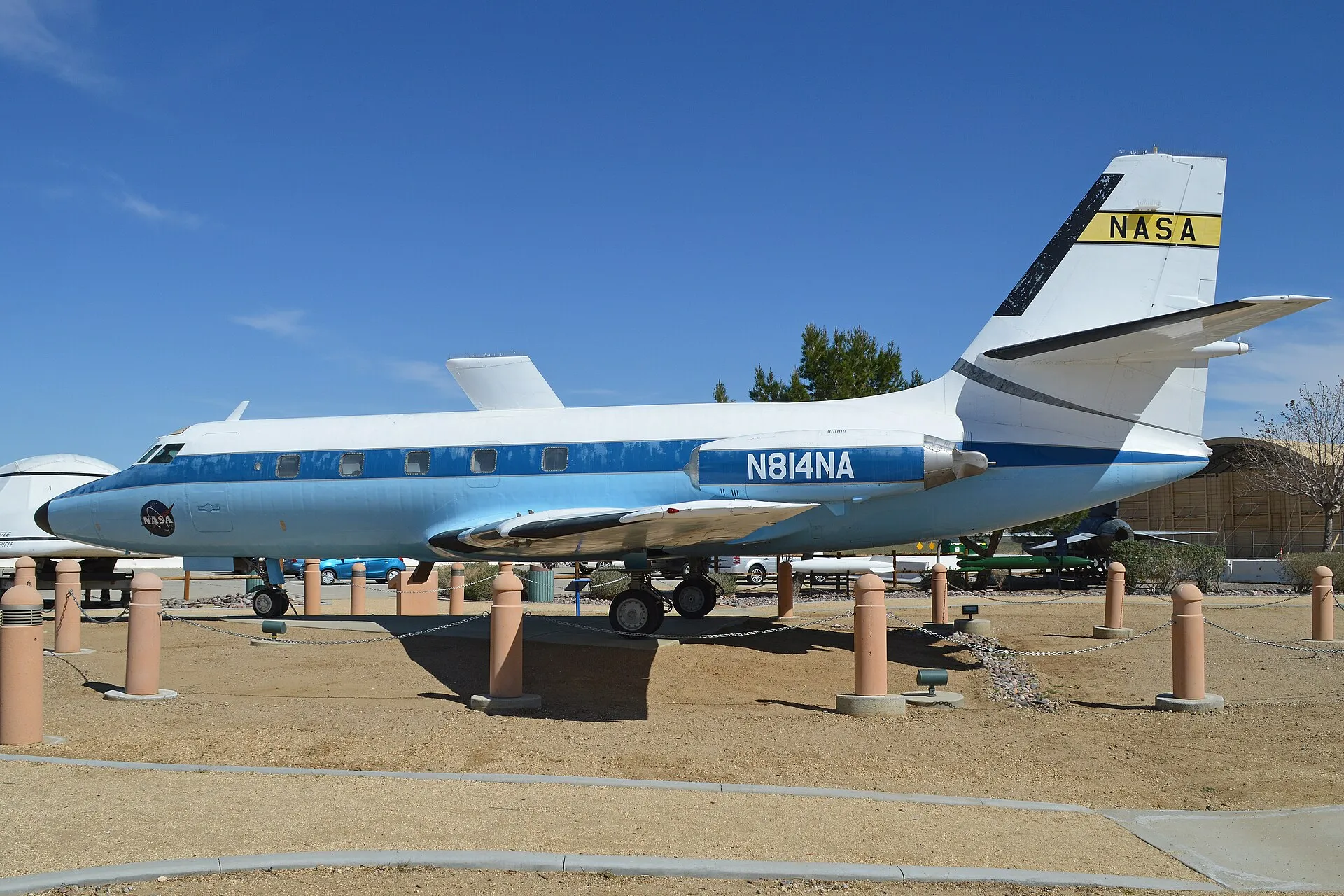
A NASA Lockheed JetStar – Goldfinger's private jet is an aircraft of this typePhoto: Alan Wilson from Stilton, Peterborough, Cambs, UK · CC BY-SA 2.0 · Wikimedia Commons Lockheed JetStar
AircraftGoldfinger's private jet, used to fly Bond to the USA and setting of the finale
Goldfinger's private jet carries the drugged Bond from Geneva to Kentucky with Pussy Galore at the controls; in the finale an aircraft of the same type flies Bond towards Washington until Goldfinger appears, a shot depressurises the cabin and the plane crashes into the sea. The JetStar was the first business jet of its class, with four tail-mounted engines and seats for ten; filming used an example registered N711Z, supplemented by model shots whose right-hand side was painted as the presidential aircraft for the crash. The photo shows a NASA JetStar.
- Driven by
- Pussy Galore
- Specs
- Four Pratt & Whitney JT12A-8 turbojets, 3,300 lbf each, 567 mph
Sources: IMPDb: Goldfinger · Wikipedia (en): Lockheed JetStar · Wikipedia (en): Goldfinger (film) · BMT216A.dk: Lockheed C-140 JetStar
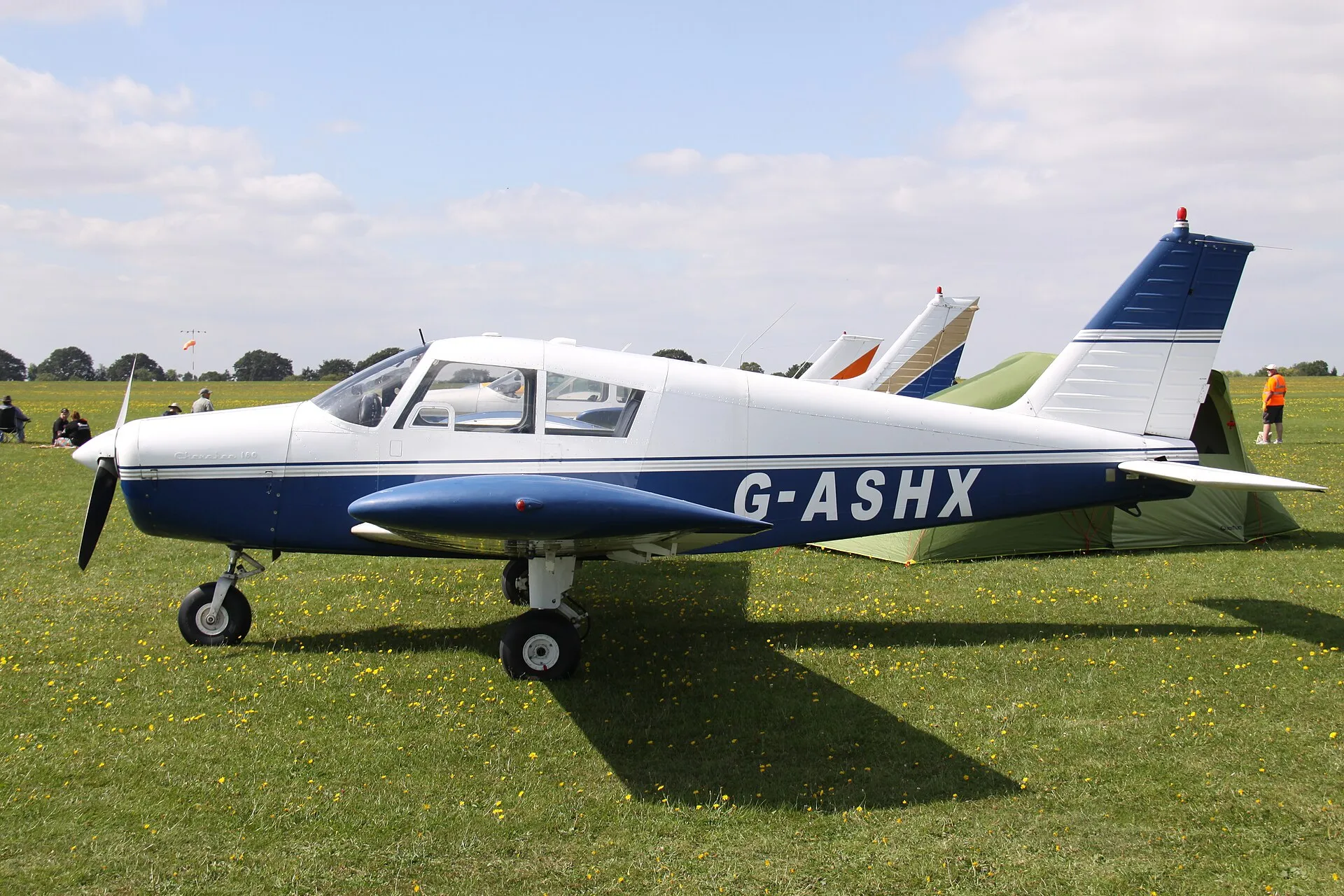
A Piper Cherokee B – Pussy Galore's Flying Circus gasses Fort Knox with aircraft of this typePhoto: Aeroprints.com · CC BY-SA 3.0 · Wikimedia Commons Piper PA-28 Cherokee
AircraftThe aircraft of Pussy Galore's Flying Circus that gas Fort Knox
The five aircraft of Pussy Galore's Flying Circus are meant to knock out the Fort Knox garrison with Delta 9 nerve gas; after Galore switches sides the pilots unknowingly spray a harmless substitute. According to IMPDb three Cherokee Bs, one Cherokee 140 and one Cherokee 235 flew in formation. The PA-28 was Piper's all-metal low-wing light aircraft introduced in 1960, from 1962 also as the 180 hp Cherokee 180. The photo shows a Cherokee B.
- Driven by
- Pussy Galore's Flying Circus
- Specs
- Lycoming O-360 flat-four, 180 hp, 142 mph (Cherokee 180)
Sources: IMPDb: Goldfinger · Wikipedia (en): Piper PA-28 Cherokee · BMT216A.dk: Piper Cherokee PA-28
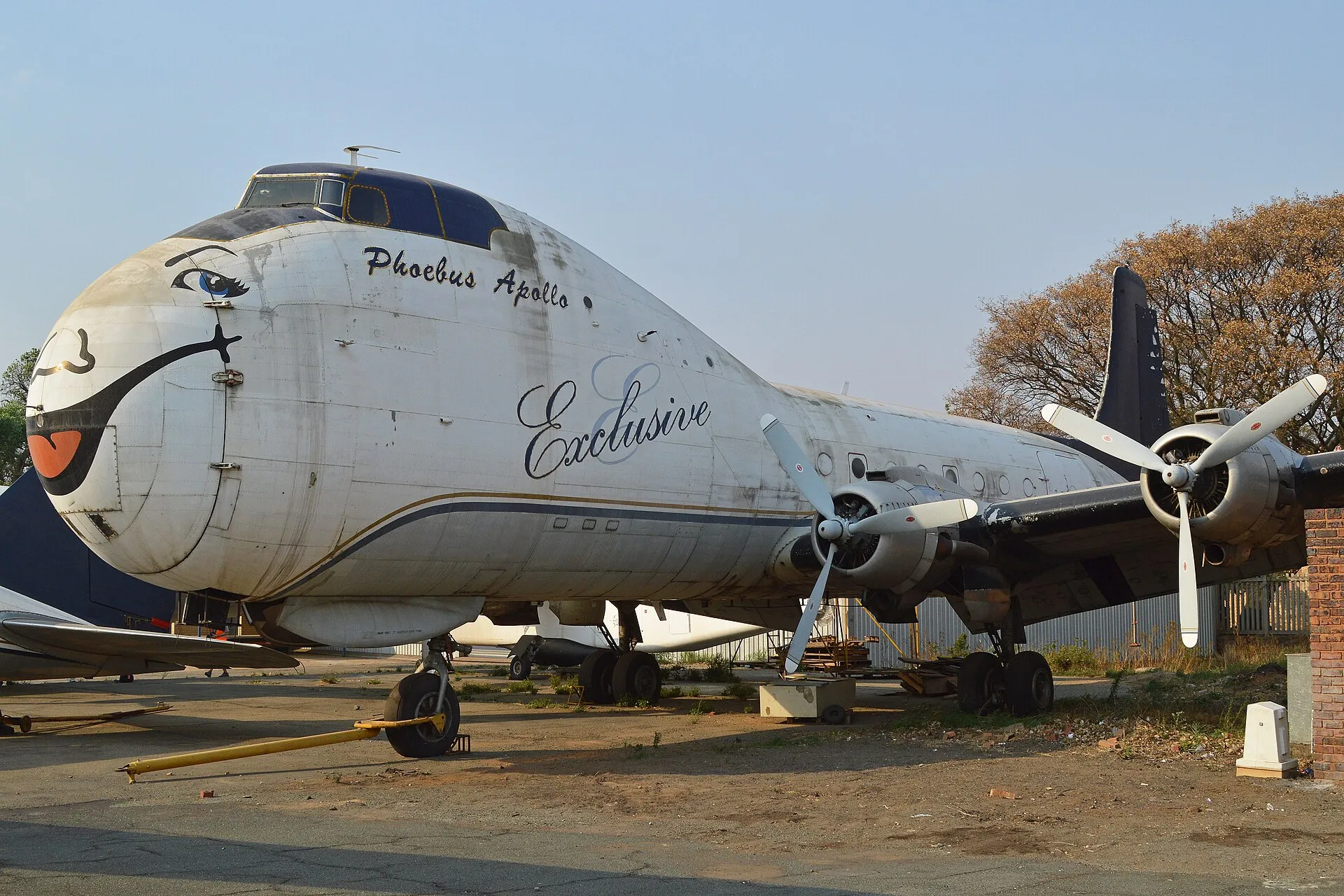
A Carvair of this type is loaded with Goldfinger's Rolls-Royce at Southend and flown to GenevaPhoto: Alan Wilson from Stilton, Peterborough, Cambs, UK · CC BY-SA 2.0 · Wikimedia Commons Aviation Traders ATL-98 Carvair
AircraftThe car ferry that flies Goldfinger, Oddjob and the Rolls-Royce from Southend to Geneva
At Southend the Rolls-Royce is driven into the nose of British United Air Ferries' Carvair G-ASDC while Bond tracks the homing signal and crosses with the DB5 himself. The Carvair was a Douglas DC-4 converted by Aviation Traders at Southend and Stansted with a raised cockpit and nose door, carrying five cars and 22 passengers across the Channel; only 21 were built between 1961 and 1968.
- Driven by
- Goldfinger and Oddjob as passengers
- Specs
- Four Pratt & Whitney R-2000 radials, 1,450 hp each, 250 mph
Sources: Wikipedia (en): Aviation Traders Carvair · IMPDb: Goldfinger · Aerospaceweb: Carvair in Goldfinger
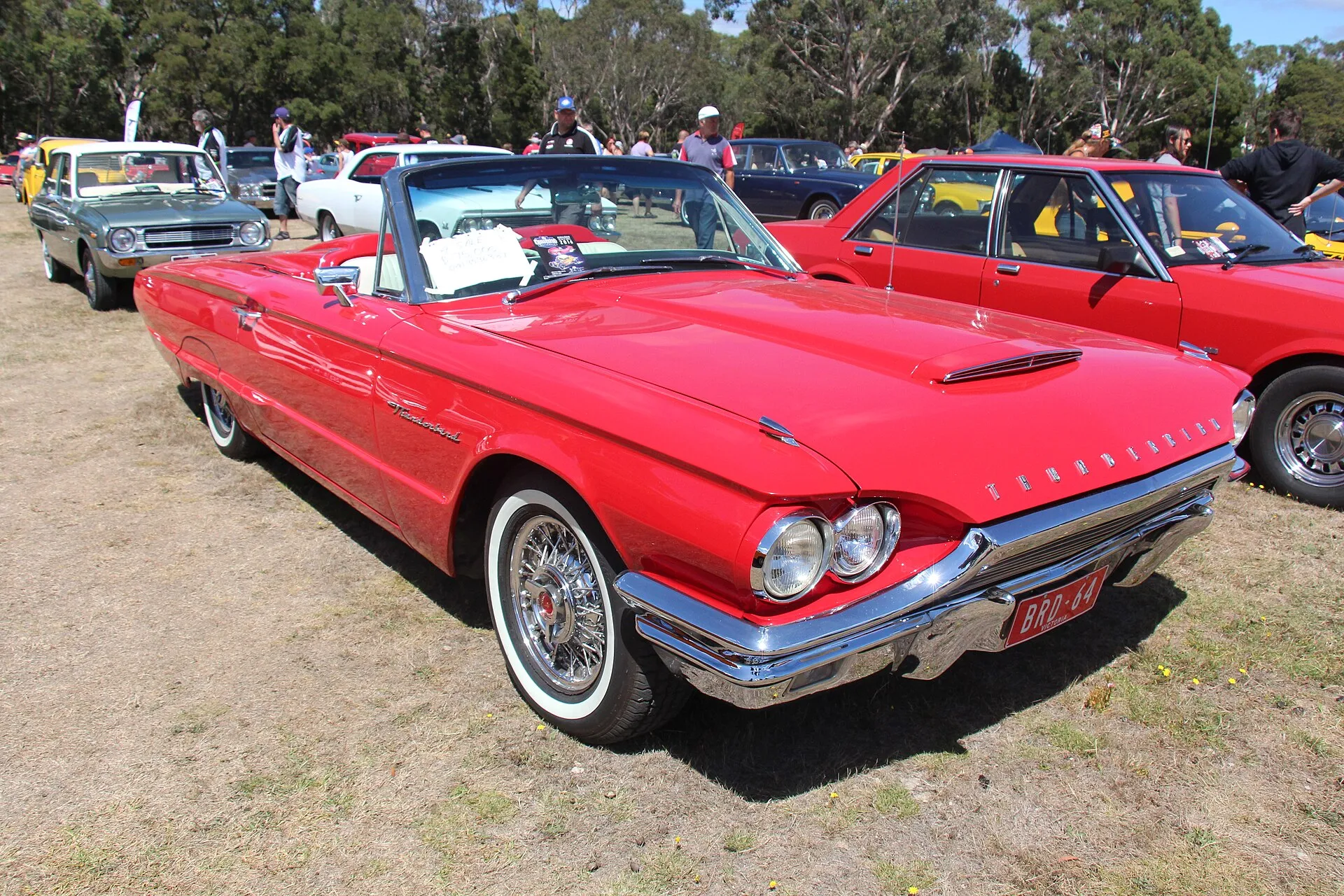
A production 1964 Thunderbird; in the film Felix Leiter drives a white convertible of this typePhoto: Sicnag · CC BY 2.0 · Wikimedia Commons Ford Thunderbird Convertible (1964)
Car1964Leiter's white convertible in which he shadows Bond in Kentucky
Felix Leiter and his CIA colleague follow Goldfinger's convoy through Kentucky in the white Thunderbird and see Bond's note flutter out of the Lincoln, but assume he is safe. Like the Mustang, Country Squire and Lincoln the car came from Ford's product placement deal, one of the first big tie-ins of its kind in cinema. The fourth-generation Thunderbird, restyled for 1964, sold 92,465 units. The photo shows a production example.
- Driven by
- Felix Leiter
- Specs
- 6.4 L V8 (390 cu in), 300 hp, about 120 mph
Sources: IMCDb: 1964 Ford Thunderbird Convertible [76A] in Goldfinger · Wikipedia (en): Ford Thunderbird (fourth generation) · Wikipedia (de): Ford Thunderbird · Wikipedia (en): Goldfinger (film)
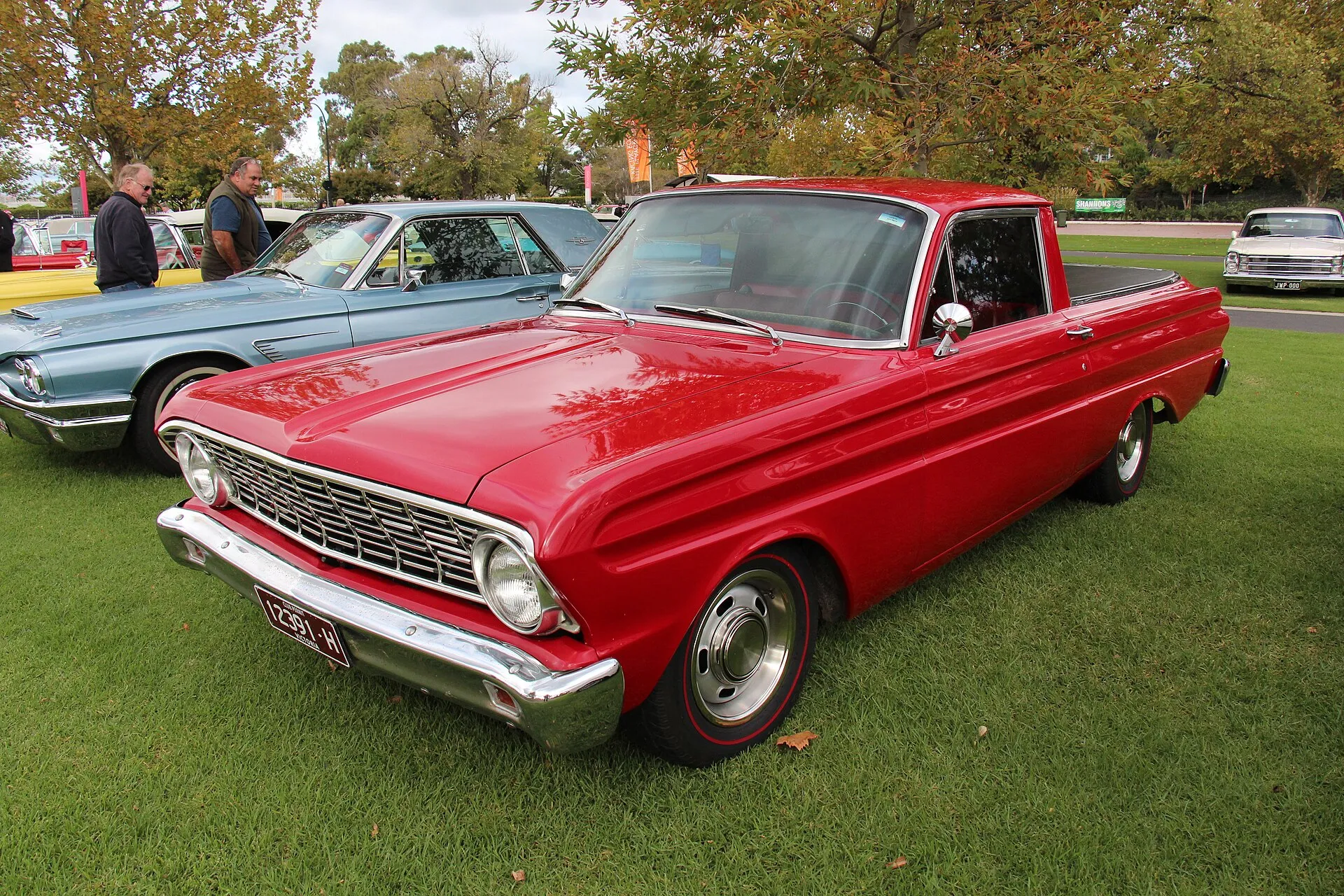
A production 1964 Ranchero – Oddjob hauls the crushed Lincoln away on a pickup like thisPhoto: Sicnag · CC BY 2.0 · Wikimedia Commons Ford Falcon Ranchero (1964)
Car1964The pickup on which Oddjob hauls the crushed Lincoln away from the scrapyard
Once the crusher has squeezed the Lincoln, Solo and gold into a cube, the crane drops the block onto the Ranchero's bed and Oddjob drives it back to Goldfinger's stud farm; for the scene the crushed Lincoln had to be cut down so that the bed could carry the weight. Since 1960 the Ranchero had been a pickup based on the compact Falcon, in 1964 with 2.8 and 3.3-litre sixes or the 4.3-litre V8. The photo shows a production example.
- Driven by
- Oddjob
- Specs
- 2.8 L or 3.3 L straight-six, optional 4.3 L V8
Sources: IMCDb: 1964 Ford Falcon Ranchero in Goldfinger · Wikipedia (en): Ford Ranchero · Wikipedia (en): Goldfinger (film)
_front_gadgets_National_Motor_Museum,_Beaulieu.jpg)

.jpg)
.jpg)
.jpg)
.jpg)
.jpg)
.jpg)
.jpg)
Gadgets
Homing device
A magnetic transmitter for Goldfinger's Rolls-Royce and a smaller one in Bond's shoe heel, tracked on a screen in the Aston Martin.
Sources: Wikipedia (en): Goldfinger (film) · Bond Lifestyle: Goldfinger tracking device prop replica · 007.com: Aston Martin DB5
The Aston Martin DB5 with its gadgets at the National Motor Museum in BeaulieuPhoto: Morio · CC BY-SA 3.0 · Wikimedia Commons Aston Martin DB5 equipment
Ejector seat, machine guns behind the indicators, oil slick, smoke screen, tyre-slashing hubcaps, bulletproof rear shield, extending bumper rams, a radar screen for the homing device and three revolving number plates for England, France and Switzerland. Ken Adam and John Stears built the equipment into the prototype in six weeks; the caltrop dispenser also fitted was cut from the finished film for fear of copycats.
Sources: 007.com: Aston Martin DB5 · Wikipedia (en): Goldfinger (film) · astonmartins.com: DB5 for 007 James Bond (Goldfinger/Thunderball)
Diving suit with seagull decoy
In the pre-title sequence Bond disguises his diving helmet with a fake seagull and wears an immaculate white dinner jacket under his wetsuit.
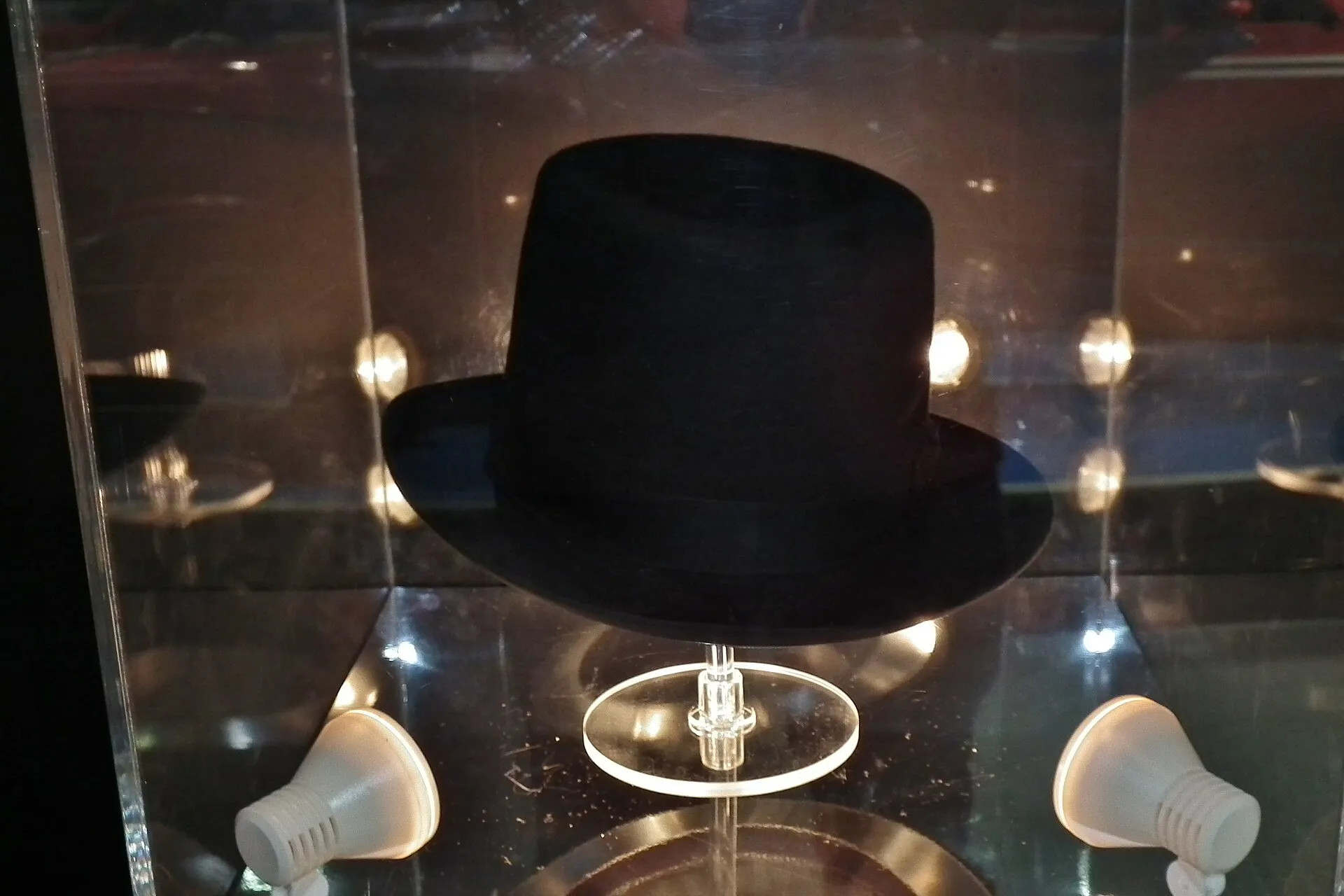
Oddjob's steel-brimmed bowler hat on displayPhoto: sv1ambo · CC BY 2.0 · Wikimedia Commons Oddjob's bowler hat
A hat with a razor-sharp steel brim that the bodyguard throws as a lethal weapon; it decapitates a stone statue and breaks Tilly Masterson's neck. The bowler came from London hatter Lock & Co., with John Stears devising the flying mechanics. The original sold at Christie's in 1998 for £62,000.
Sources: Wikipedia (en): Oddjob · Wikipedia (en): Goldfinger (film)
Goldfinger's industrial laser
The laser beam creeping towards Bond on the gold table – the first appearance of a laser in a feature film. In the novel it was a circular saw; the beam itself was an optical effect added in post-production, and for the close-ups technician Bert Luxford heated the metal from below with a blowtorch.
Sources: Wikipedia (en): Goldfinger (film)
.jpg)
Production and trivia
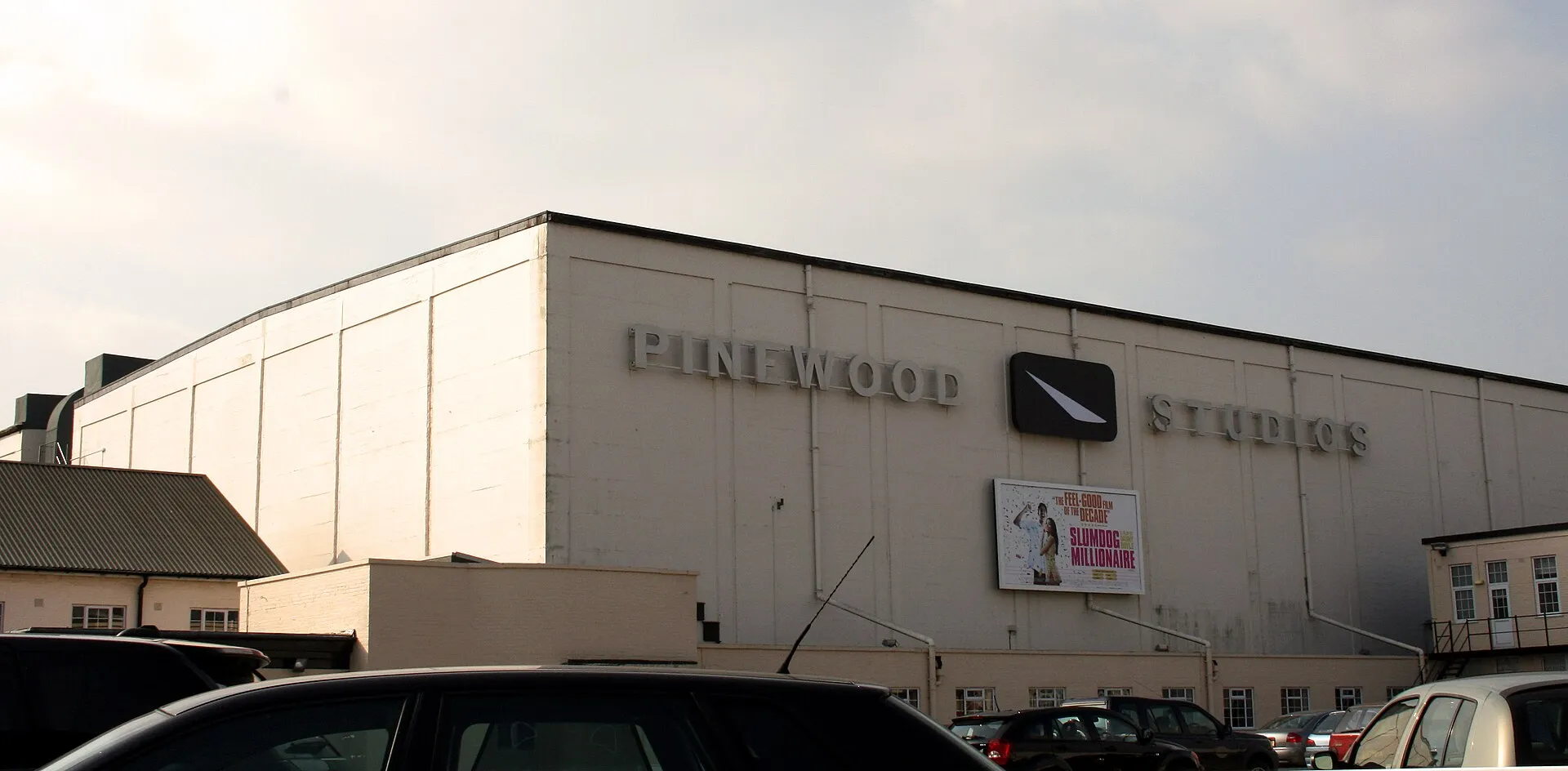
- Principal photography ran from 20 January to July 1964 with Pinewood Studios as the base; the final location work was done in Andermatt, Switzerland.
- Terence Young, director of the first two films, walked away after a pay dispute; Guy Hamilton took over and established the blend of humour, gadgets and megalomania that became the series formula.
- Gert Fröbe spoke little English and learned his lines phonetically, which came across too slowly. British actor Michael Collins re-voiced him in the original – widely regarded as one of the most successful dubs in film history.
- Israel initially banned the film because Fröbe had been a Nazi Party member in the 1930s. The ban was lifted after a Jewish family revealed that Fröbe had hidden them in Vienna during the war.
- With a budget of about $3 million – as much as the first two films combined – the film recouped its costs within weeks. The Guinness Book of Records listed it as the fastest-grossing film ever.
- Norman Wanstall won the Academy Award for Best Sound Effects Editing, the first Oscar for a Bond film. Ken Adam was nominated for a BAFTA for art direction and John Barry for a Grammy.
- The Aston Martin DB5 was kitted out in six weeks by Ken Adam and effects man John Stears. The revolving plates were Hamilton's idea, the ejector seat his stepson's; the Corgi toy became Britain's best-selling toy of 1964.
- Applying Shirley Eaton's gold body paint took about 90 minutes. The notion that a fully painted person suffocates through the skin is medically baseless – it persisted for decades anyway, and the image put Eaton on the cover of Life magazine.
- Lasers did not exist when Fleming wrote the novel; in the film one replaces the book's circular saw. For the close-ups technician Bert Luxford heated the metal from below with a blowtorch, the beam itself was added optically later.
- Harold Sakata suffered real burns while filming Oddjob's electrocution but held on to the hat until Hamilton called cut. Sean Connery injured his back during a fight scene with Sakata.
- Nobody was allowed inside Fort Knox – Ken Adam invented the cathedral-like vault with towering stacks of gold from scratch. United Artists later received angry letters asking how the British had been let into the depository.
- Only the aerial and exterior shots come from the Fontainebleau in Miami Beach; the scenes with the actors were shot in April 1964 in a replica on Pinewood's D Stage.
- Guy Hamilton had the Kentucky Fried Chicken restaurant filmed in Miami because he took it for a Kentucky landmark – unaware that the chain existed all over the United States.
- Shirley Bassey's title song was the first Bond theme to reach the top ten; future Led Zeppelin members Jimmy Page and John Paul Jones played on the recording. The soundtrack knocked the Beatles off the top of the US album chart.
- The German version was made by Ultra-Film Synchron in Berlin, with Gert Günther Hoffmann voicing Connery and Fröbe voicing himself. It opened on 14 January 1965 rated 16 and drew around five million cinemagoers in Germany.
Images




_01.jpg)
.jpeg)
.jpg)

.jpg)
Sources
- Goldfinger (film) – Wikipedia (en)(en)accessed 7 September 2026
- James Bond 007 – Goldfinger – Wikipedia (de)(de)accessed 7 September 2026
- List of James Bond film locations – Wikipedia (en)(en)accessed 7 September 2026
- Goldfinger – Box Office Mojo(en)accessed 7 September 2026
- Filming Locations for Goldfinger (1964) – movie-locations.com(en)accessed 7 September 2026
- Goldfinger – Deutsche Synchronkartei(de)accessed 7 September 2026
- Atlantic Iron & Metal Company / Goldfinger – 007 Travelers(en)accessed 7 September 2026
- Kentucky Fried Chicken in Kentucky / Goldfinger – 007 Travelers(en)accessed 7 September 2026
- Fontainebleau Miami Beach – Wikipedia (en)(en)accessed 7 September 2026
- Stoke Park, Buckinghamshire – Wikipedia (en)(en)accessed 7 September 2026
- London Southend Airport – Wikipedia (en)(en)accessed 7 September 2026
- Furka Pass – Wikipedia (en)(en)accessed 7 September 2026
- Andermatt – Wikipedia (en)(en)accessed 7 September 2026
- Pilatus Aircraft – Wikipedia (en)(en)accessed 7 September 2026
- Black Park – Wikipedia (en)(en)accessed 7 September 2026
- RAF Northolt – Wikipedia (en)(en)accessed 7 September 2026
- Stanwell Moor – Wikipedia (en)(en)accessed 7 September 2026
- United States Bullion Depository – Wikipedia (en)(en)accessed 7 September 2026